Most people do not think about oral cancer until something feels very wrong. But the truth is, the earlier it is caught, the better the outcome. Knowing the warning signs can make a real difference. If you notice anything unusual in your mouth, getting an oral cancer screening in Etobicoke sooner rather than later is always the right move.
Why Oral Cancer Is Often Missed Early On
Oral cancer is tricky. In the beginning, it does not always hurt. It does not always look dramatic. Many people brush off the early signs as a minor irritation or a small sore that will heal on its own. That waiting can be costly. Oral cancer that is found early is far more manageable than cancer that has been growing quietly for months.
A dentist in Etobicoke is often the first healthcare professional to spot these early signs—during a routine checkup, before the patient even notices anything.
What Exactly Is Oral Cancer?
Oral cancer refers to cancer that develops in any part of the mouth. This includes:
- The lips
- The tongue
- The gums
- The inner cheeks
- The roof and floor of the mouth
- The throat area just behind the mouth
It can affect anyone. However, some people carry a higher risk than others.
Who Is Most at Risk?
While oral cancer can develop in anyone, certain factors increase the risk:
| Risk Factor | Why It Matters |
| Tobacco use (smoking or chewing) | One of the strongest known risk factors |
| Heavy alcohol consumption | Significantly raises risk, especially combined with tobacco |
| HPV infection | A growing cause of oral cancers, especially in younger adults |
| Prolonged sun exposure | Increases the risk of lip cancer specifically |
| Age over 40 | Risk tends to increase with age |
| Poor diet, low in fruits and vegetables | May weaken the body’s natural defences |
| Previous oral cancer diagnosis | Raises the chance of recurrence |
Even if none of these apply to you, regular screening is still a smart habit.
Early Warning Signs You Should Never Ignore
This is the most important section. These are the signs that should prompt you to see a dentist near you without delay.
1. A Sore That Does Not Heal
Most mouth sores heal within one to two weeks. If a sore in your mouth, on your lip, or on your tongue has been there for more than two weeks, get it checked. Do not wait for it to hurt more.
2. Red or White Patches Inside the Mouth
Healthy mouth tissue is pink and smooth. If you notice:
- Red patches — called erythroplakia
- White patches — called leukoplakia
- Mixed red and white patches
These can sometimes be early signs of abnormal cell changes. They are not always cancerous, but they should always be evaluated.
3. Unexplained Bleeding in the Mouth
If your mouth bleeds without an obvious reason — and it keeps happening — that is worth investigating. This is different from bleeding gums caused by brushing too hard.
4. There is a lump or thickening in your mouth or neck
Feel around your neck and inside your cheeks gently. Any lump, bump, or thickened area that was not there before needs professional attention.
5. Difficulty Swallowing or Chewing
If eating or swallowing has started to feel different — uncomfortable, stiff, or unusual — do not ignore it. This can sometimes point to changes in the throat or mouth tissues.
6. Numbness or Persistent Pain
A numb feeling in the mouth, tongue, or lips that does not go away is not normal. Neither is a dull, persistent ache in the jaw or mouth area.
7. Changes in Your Voice or Speech
Slurred speech, a hoarse voice, or sudden changes in how you sound can sometimes be connected to changes in the mouth or throat.
What Happens During an Oral Cancer Screening?
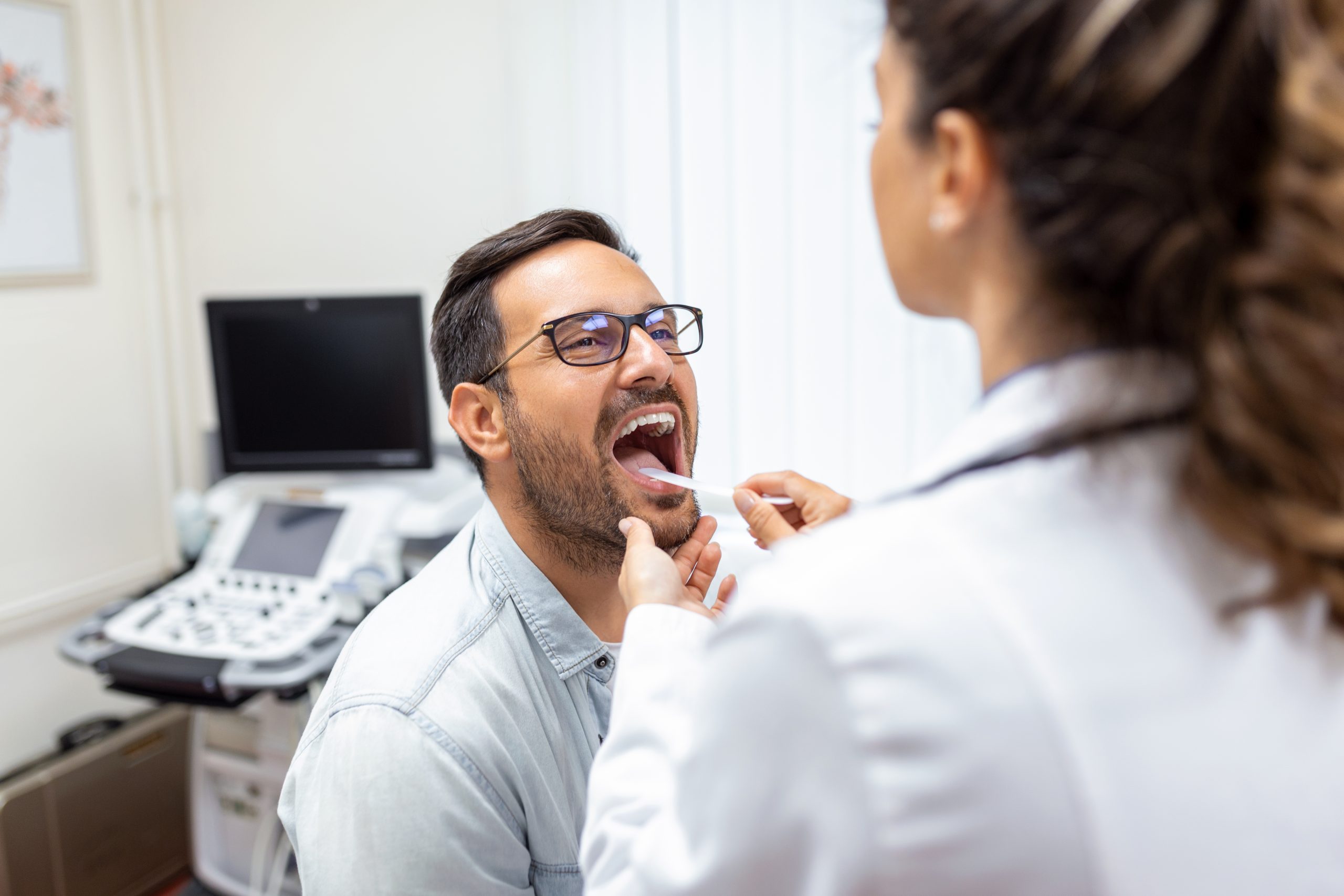
An oral cancer screening near you is simple, quick, and completely painless. Here is what to expect:
- Visual examination — the dentist looks at all areas of your mouth carefully
- Physical check — they gently feel for lumps or unusual textures
- Special tools may be used—some clinics use special lights or dyes to highlight abnormal tissue
- Results discussion — if anything looks unusual, the dentist explains next steps clearly
The whole process usually takes just a few minutes during your regular dental visit. There is nothing to fear.
How Often Should You Get Screened?
For most adults, once a year during a routine dental checkup is a sensible approach. If you have any of the risk factors mentioned above, your dentist may suggest more frequent screening.
The key message is simple — do not wait for symptoms to become severe before you act.
Simple Steps That Support a Healthy Mouth
Alongside regular screenings, these daily habits can help lower your overall risk:
- Don’t smoke tobacco
- Don’t consume a lot of alcohol or drink none at all
- Consume lots of fruit and vegetables
- Wear lip balm with sunblock when outside
- Have good daily oral hygiene
- Have your dentist check up regularly
No single habit eliminates risk, but together they make a meaningful difference.
Your Mouth Is Telling You Something — Are You Listening?
Oral cancer is serious—but it is also one of the most detectable cancers when caught early. The signs are there. They just need to be recognized and acted on quickly.
At Parklawn Smiles, your health and peace of mind matter deeply. Their experienced team provides thorough, compassionate care — and takes every concern seriously. If something does not feel right in your mouth, do not put it off. Book a visit with the team at Parklawn Smiles and get the clarity you deserve.
Frequently Asked Questions
Q1. Is an oral cancer screening painful?
No, the screening is a pain-free and non-intrusive procedure and takes only minutes during your regular check-up with your dentist.
Q2. Is it possible to get oral cancer even if I have no risk factors?
Yes, though risk factors may increase the odds, anyone can be affected by oral cancer, and this is why a screening is necessary.
Q3. Are white patches in the mouth always a sign of cancer?
Not always, but they should always be examined by a dentist to rule out any abnormal cell changes.
Q4. At what age should oral cancer screening begin?
Most dental professionals recommend starting routine oral cancer screenings in early adulthood, around age 18 to 20.